
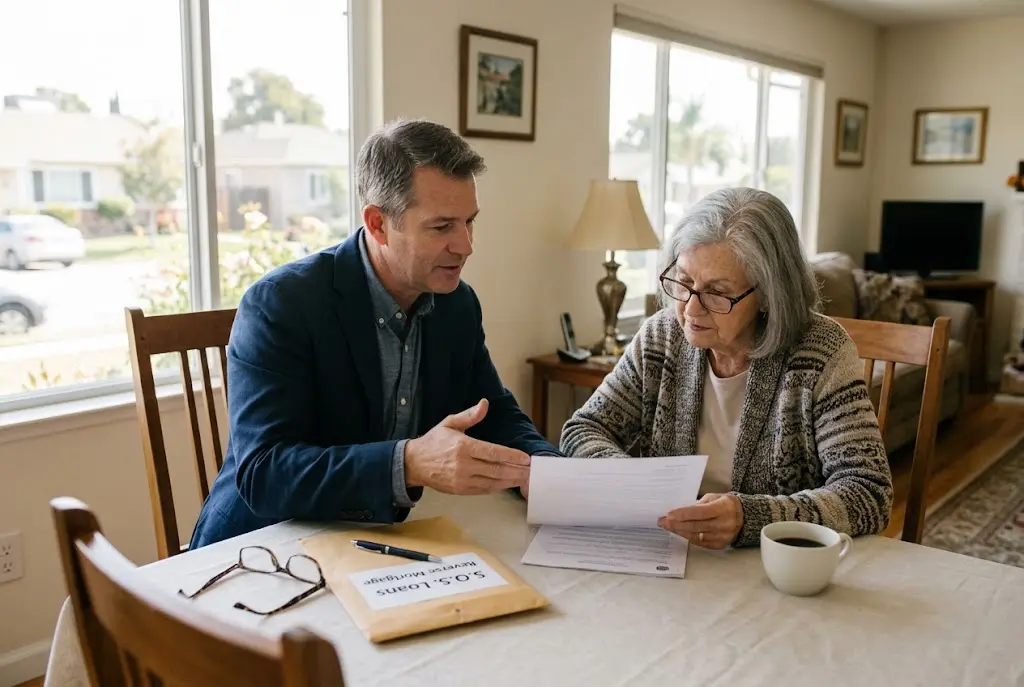
From Application to Closing: Reverse Mortgage Guidance Every Step of the Way
- Reverse Mortgage Process
- Senior Homeowners
- Personal Reverse Mortgage Service
- Broker Advantage
- California Reverse Mortgages
The S.O.S. Loans Broker Advantage
From Application to Closing: Reverse Mortgage Guidance Every Step of the Way
A reverse mortgage involves more than filling out an application. From gathering documents and preparing for the appraisal to responding to underwriting requests and reviewing closing paperwork, having a knowledgeable point of contact can make the process easier to understand.
For many homeowners, a reverse mortgage is an unfamiliar financial transaction. You may have questions about what happens first, which documents you need, how long the process takes, or what the lender needs before approving and closing the loan.
At S.O.S. Loans, we believe homeowners deserve personal guidance throughout the process—not just help submitting an application. As a mortgage broker, Frank Stiebel helps clients explore available wholesale lender programs, understand the steps ahead, and navigate questions as the transaction progresses.
Every transaction is different. Timing, documentation, eligibility, and lender requirements can vary by loan program and individual circumstances. Our goal is to help you understand what is happening, what may be needed from you, and what to expect next.
Start With Your Own Reverse Mortgage Scenario
Have questions about your property or the process? Begin by exploring potential options with S.O.S. Loans.
Explore My Options Use the Calculator
1. Before the Application: Understanding Your Goals
The process should begin with a conversation about what you want a reverse mortgage to accomplish. Some homeowners want to supplement retirement income. Others are exploring ways to manage existing mortgage payments, create a financial reserve, or access some of the equity in a higher-value home.
Your goals matter because reverse mortgage programs are not all identical. Available proceeds, eligibility requirements, interest rates, fees, and loan features can differ between lenders and products.
During the initial conversation, we can discuss your property, your general objectives, and the types of programs that may be worth exploring. We can also talk through questions you should consider before deciding whether to apply.
Questions Worth Discussing at the Beginning
What do you want the loan to help you accomplish?
Which reverse mortgage programs may fit your age and property?
What fees, interest charges, and other costs should you understand?
What responsibilities would you retain as a borrower?
Are there alternatives you should compare before making a decision?
There is no need to rush into a decision simply because you have started asking questions. An informed conversation can help you determine whether moving forward makes sense for your circumstances.
2. Comparing Available Lenders and Programs
Once we understand your objectives, the next step may be reviewing available wholesale lender programs. As a broker, S.O.S. Loans can explore participating lenders and potential loan options rather than assuming that one program will suit every homeowner.
Depending on your circumstances, options may include a federally insured Home Equity Conversion Mortgage (HECM) or a proprietary reverse mortgage program. These programs can have different eligibility rules, loan limits, pricing, and features.
For homeowners with higher-value properties, it may be worth asking whether a proprietary program could offer an alternative to a traditional HECM. However, not every lender or product will be available or suitable for every applicant.
What We Look at When Comparing Options
Eligibility: Age, property type, occupancy, financial circumstances, and other program requirements.
Estimated proceeds: How much may be available under the specific program and your circumstances.
Interest and fees: The costs and pricing disclosed for each available option.
Loan structure: How funds may be accessed and what terms and conditions apply.
Your goals: Whether the option appears consistent with your needs and plans.
Comparisons should be based on available program information and applicable lender disclosures. Estimated proceeds are not a guarantee of approval or final loan terms.
3. The Application: Getting the Process Underway
When you decide to proceed with a particular option, the lender's application and documentation process begins. The exact requirements depend on the loan program, your property, and your individual situation.
You may be asked to provide identification, information about the property, details of any existing mortgage, and financial or other documentation required by the lender. Additional items may be requested as the file is reviewed.
Our role is to help you understand the requested information, identify questions that need clarification, and coordinate with the appropriate parties as permitted. We can help explain what a request means, but the lender determines its underwriting and documentation requirements.
Personal Guidance When You Need It
Once we decide to move forward together, I provide my personal mobile number so you can call or text me throughout the process.
If a document is confusing, a lender request raises questions, or you are unsure what comes next, you have a direct way to reach me. I want you to understand the steps you are taking instead of feeling left to navigate the transaction alone.
4. Counseling and Required Documentation
Depending on the reverse mortgage program, you may need to complete specific counseling or other requirements before the loan can proceed. For HECM loans, independent counseling by a HUD-approved reverse mortgage counselor is generally required.
Counseling is an opportunity to learn more about how the loan works, understand your obligations, and consider whether it fits your situation. It is separate from the lender's approval process.
Other documentation requirements may include title-related information, property details, existing lien information, and financial assessments or verifications required by the program.
We can help you understand the sequence of steps and clarify questions about the process. The relevant counselor, lender, title company, and other authorized professionals remain responsible for the services and decisions within their roles.
5. The Appraisal: Understanding What Happens Next
The property appraisal is an important stage of many reverse mortgage transactions. Homeowners sometimes feel anxious about having their home evaluated, especially when it represents years of hard work, memories, and a significant portion of their wealth.
We help clients understand the general purpose of the appraisal, what to expect during this stage, and how it fits into the broader lending process.
In some situations, we have also conducted pre-appraisal visits to help homeowners feel more comfortable and prepared before the formal appraisal. These visits may provide an opportunity to discuss the process and address general questions.
A pre-appraisal visit is not a formal valuation, does not guarantee a particular value, and must not be used to influence an appraiser's independent conclusions. The formal appraisal must be completed through the appropriate process by a qualified, independent appraiser.
Our Goal: Help You Feel Prepared
We can explain the general process, help you understand what to expect, and answer questions about the transaction. The appraisal outcome itself is determined independently and cannot be promised in advance.
If the appraisal or another part of the process raises questions, we can help clarify the next steps and coordinate with the appropriate parties where possible.
6. Underwriting: Responding to Lender Requests
After the application and supporting documents have been submitted, the lender reviews the file under the requirements of the selected program. This process is commonly referred to as underwriting.
The lender may ask for additional documents, clarification, updated information, or further review of the property or borrower's circumstances. These requests are not necessarily a sign that something has gone wrong. They may be part of the lender's normal review or a response to something specific in the file.
Our job is to help you understand what has been requested, explain what we can about the process, and coordinate responses with the lender and other parties when appropriate.
Why Clear Communication Matters
You know when an item requires your attention.
You can ask questions about unfamiliar requests.
You can better understand which steps are complete and which remain outstanding.
You have a point of contact to help clarify the process as the file progresses.
Underwriting decisions and timelines remain with the lender. Additional requirements, third-party scheduling, and other circumstances can affect how long a transaction takes. No broker can guarantee approval or a specific closing date.
7. If Technology Becomes a Problem, Ask About Paper Options
Many mortgage transactions use electronic applications, online portals, digital disclosures, and electronic signatures. These tools can be convenient, but they are not comfortable for every homeowner.
If you find the technology difficult to use, tell us. Where lender rules and transaction requirements permit, we can explore traditional paper documents and ink signatures instead.
We can help clarify which documents need to be completed, discuss the available signing options, and coordinate with the appropriate parties to determine what alternatives are allowed.
Some documents or steps may still require specific electronic procedures or other formalities. We will help clarify what is possible rather than assume every document can be handled in the same way.
The process should accommodate the client whenever possible—not force the client to accommodate the technology.
8. Closing: Reviewing the Final Details
When the lender's requirements have been satisfied and the loan is ready to close, the transaction moves to its final documentation and signing stages.
Before signing, take time to review the final documents and make sure you understand the terms, costs, disbursement arrangements, and ongoing responsibilities that apply to your loan.
Questions should be addressed before you sign. Depending on the issue, we can help clarify the process or direct you to the lender, settlement agent, or other professional responsible for explaining a particular document or requirement.
Closing procedures, signing arrangements, funding, and any applicable waiting periods depend on the loan program and transaction. A specific closing date or funding date cannot be guaranteed until the relevant requirements are met.
Before You Sign, Make Sure You Understand
The final loan amount and disbursement terms.
The interest rate, fees, and other disclosed costs.
The circumstances under which the loan may become due and payable.
Your continuing obligations, including applicable property taxes, insurance, maintenance, and occupancy requirements.
Who to contact if you have questions after closing.
9. After Closing: Understanding Your Responsibilities
Closing is an important milestone, but it is also important to understand your responsibilities after the loan is completed.
Reverse mortgage borrowers generally must continue meeting applicable loan obligations, which may include maintaining the home, paying property taxes and homeowners insurance, and meeting occupancy requirements. The specific terms of your loan documents control.
Keep copies of your closing documents and any information provided by your lender about servicing, payments or disbursements, and ongoing obligations. If you are unsure about a notice or requirement after closing, contact the loan servicer or the appropriate professional for clarification.
Our aim is to help you understand the transaction from the beginning, including the responsibilities that continue after the paperwork is signed.
10. The Difference Is Having Someone to Call
A reverse mortgage involves multiple parties, and some parts of the process will be outside a broker's control. The lender makes underwriting decisions, appraisers determine property values independently, and other professionals handle their own responsibilities.
But that does not mean you should have to figure out every question alone.
At S.O.S. Loans, Frank Stiebel's personal-service approach is built around helping clients understand the steps, reviewing available wholesale lending programs, explaining what is known about the next milestone, and helping coordinate questions as the transaction progresses.
What Hands-On Guidance Looks Like
A direct point of contact once you decide to move forward together.
Help understanding documentation and lender requests.
Guidance about the appraisal process and what to expect.
Help exploring paper documents and ink signatures when permitted.
Communication about known milestones and outstanding items.
Encouragement to ask questions and make an informed decision without pressure.
The goal is not to promise a perfect or instant transaction. It is to give you a knowledgeable person who can help you understand the process and navigate the steps with greater confidence.
Have Questions About Starting a Reverse Mortgage?
Explore potential options, review your questions, and learn more about the steps involved before deciding whether to proceed.
Explore My Scenario Calculate Potential Proceeds
Prefer to talk? Call 1-800-503-6648 ext 2.
Frequently Asked Questions
How long does the reverse mortgage process take?
The timeline varies by program, lender, property, documentation, appraisal scheduling, underwriting, and other transaction-specific factors. Your broker can help you understand known milestones and outstanding items, but a specific approval or closing date cannot be guaranteed.
What documents are needed for a reverse mortgage application?
Requirements vary. Applicants may need to provide identification, property and mortgage information, financial documentation, and other items requested by the lender. The lender will identify the requirements that apply to your specific application.
Does a reverse mortgage require counseling?
HECM borrowers generally must complete counseling with a HUD-approved reverse mortgage counselor. Other program requirements may differ. Counseling helps eligible borrowers understand the loan and consider whether it suits their needs.
Can my mortgage broker help with the appraisal?
Your broker can explain the general appraisal process and help you understand what to expect. Any formal appraisal must be performed through the appropriate process by an independent appraiser. Neither a broker nor a pre-appraisal visit can guarantee the final property value.
What if I need help with electronic forms or signatures?
Ask whether paper documents and ink signatures are available for your transaction. Where lender rules and transaction requirements permit, alternatives may be possible. Some steps may require specific electronic or other formal procedures.
Can I stop if I decide a reverse mortgage is not right for me?
You should understand your rights, any commitments already made, and any applicable costs before proceeding. Exploring a reverse mortgage does not mean you should automatically take one out. Ask questions and carefully consider your options before making a decision.
What responsibilities do I have after closing?
Borrowers generally must meet applicable loan obligations, which can include paying property taxes and homeowners insurance, maintaining the home, and meeting occupancy requirements. Review your loan documents and ask the lender or servicer about your specific obligations.
Personal Guidance From Frank Stiebel

Written by Frank Stiebel
Senior Equity Strategist & High-Value Lending Expert
Frank helps California homeowners explore reverse mortgage options through an education-first, personalized approach. He reviews available wholesale lender programs and helps clients understand the process, from the initial conversation and application through appraisal, underwriting, and closing.
His approach emphasizes direct communication, clear explanations, and helping homeowners make informed decisions without unnecessary pressure.
Your Home. Your Goals. Your Decision.
Learn more about reverse mortgage options available to eligible California homeowners and take the time you need to decide whether an option fits your circumstances.
Contact S.O.S. Loans Call 1-800-503-6648 ext 2
Important information: This article is for general educational purposes only. It is not a commitment to lend, a guarantee of eligibility, or a promise of loan proceeds, property value, approval, or closing date. Reverse mortgage availability, eligibility, costs, and terms vary by program and borrower. Borrowers must meet applicable loan obligations. Review all lender disclosures and loan documents carefully and consult appropriate financial, legal, or tax professionals for advice about your individual circumstances.